Author: Steven R. Bruck
Hanukkah 2020 Message
חג שמח! Chag Sameach!
Happy Hanukkah to all who celebrate this joyous holiday.
If you prefer to watch a video, click on this link: Watch the video.
The Torah parashah for this Shabbat is called Vayeshev, which relates the story of Joseph. It begins with Israel giving him the coat of many colors, how he tells his brothers of his dreams showing he will rule over them one day which leads, along with other reasons, to his brother’s plot to destroy him, to him being sold into slavery in Egypt. While a slave, he is unjustly accused by his master’s wife, thrown into jail, and while there he interprets the dreams of the Pharaoh’s Baker and Cupbearer. The parashah ends with how the Cupbearer, after being restored to his post as Joseph saw in his dream, forgets to mention Joseph to the Pharaoh.
I think, though, instead of the parashah, I would like to talk with you about Hanukkah. After all, we all know the story of Joseph, but how many really know about Hanukkah?
You won’t find the story anywhere in the Tanakh, and it’s only mentioned, briefly, in the New Covenant. The places you will find the story of Hanukkah, which is told in the Books of the Maccabees (there were originally supposed to be five books, but they have been condensed into two), is in the Talmud, Septuagint, and the Apocrypha, and the only place you will find the Apocrypha included with scripture is in a Catholic Bible.
In the first book of the Maccabees, we are told how Antiochus IV Epiphanes was continuing the program called Hellenization, which was started about 1-1/2 Centuries earlier by Alexander the Great. Hellenization is the replacement of all cultures with that of the Greeks, and so in Judea, under Antiochus, circumcision and any other Jewish ritual or worship was strictly forbidden. He sacrificed pigs on the altar in the Temple of Solomon, which is the abomination that causes desecration Daniel prophesied about.
One of the generals, in a town called Modein, was enforcing these laws and as one of the priests of the town was converting to the Greek religion, the father of the Maccabees, Mattathias, became zealous for God and killed the priest, as well as the soldiers of the king. After this act of rebellion, he and his 5 sons hid in the desert, and as word got around he gained followers who wanted to rid Judea of the Seleucid rule.
Eventually, there was a full-out rebellion, and these Jewish farmers and shepherds, with little more than pitchforks, hoes, and other farming implements, fought against what was probably the best armed and most experienced professional army the world knew at that time. Imagine a man with a sharpened stick going against an elephant wearing armor plating on its body and archers sitting on its back. That would be like you or I standing in the way of an Abrams tank!
And the real miracle of Hanukkah doesn’t have to do with a lamp but is the fact that we won!
The temple was cleansed and ritual purification was to begin, with the relighting of the Ner Tamid, the Eternal Light that was never supposed to be extinguished.
Now, here is where the story is embellished with Jewish mythology from the Babylonian Talmud: there is no mention of oil lasting 8 days anywhere in the books of the Maccabees. According to legend, there was only one day’s worth of ritually purified oil for the Ner Tamid, but it miraculously burned for 8 days, which was just the right amount of time needed to produce more ritually pure oil. This is why we light the Hanukkiah (it is not a menorah) with a new candle every night during the 8 nights of Hanukkah. The ninth candle, which is called the Shamash (leader) is used to light the other candles as we recite the prayer for the Hanukkah candles:
Bah-rookh ah-tah ah-doh-noi, eh-loh-hay-noo meh-lekh hah-oh-lahm, ah-sher ki-deh-shah-noo beh-mitz-voh-tahv, veh-tzee-vah-noo, leh-hahd-lik nayr, shel kha-noo-kah
Blessed are You, Lord our God, King of the universe, who has sanctified us with His commandments, and commanded us to kindle the Chanukah light.
The second book of the Maccabees is a continuation of the story and outlines the events after the initial rebellion, the leadership by the oldest Maccabee, Judas, and how he restored Jewish rule and freedom of worship in Judea. It also tells of the eventual plots against the Maccabees, resulting in they’re being deposed by the very people they saved.
There are also a number of atrocities outlined in these books regarding the torture of the Jews who refused to accept the Greek religion. When Antiochus heard of a rebellion, his army slaughtered some 40,000 men, women, and children, and another 40,000 were enslaved.
One story from 2 Maccabees is about a woman with 7 sons. They were told they had to eat pork but each refused, being tortured to death, one-by-one, with their mother watching. As the last son refused, it is told how the general even begged the mother to tell her son to comply so she wouldn’t have to lose all her children. Instead of telling her son to eat the pork, she told him not to eat the pork so that the death of the other sons was not for nothing.
Other stories of torture include ripping pregnant women apart, sliding men down a ramp with sharp knives along the way, whippings, cutting out of tongues, hands being cut off, and roasting people alive on a metal pan over a burning hot fire.
Ouch!
But, despite the torture, the desire by the populace to do what is right in God’s eyes, even to the point of death, is what the Greeks faced, although there were many who turned from the faith. Eventually, God came to the aid of his people when they rebelled against this evil.
There are some who refuse to celebrate Hanukkah simply because it isn’t commanded in the Tanakh, even though they recognize it is meant to glorify God. That is their choice, and I suspect they don’t celebrate Purim or Simchat Torah, either, since neither of those holidays are commanded. And, again, I don’t want to originate a discussion about whether or not you should celebrate Hanukkah or Purim or Christmas or Easter, or whatever- frankly, if it isn’t commanded to be celebrated, then it is a personal choice.
Today we see a similar sort of evil in America: not that there is a king taking away our ritual worship and torturing people, but there is a growing societal conversion from morality and righteousness to selfishness and the condoning, actually more than that, the enthusiastic supporting of sinfulness.
Have you noticed that in family-oriented commercials now there is almost always a same-sex couple? Have you heard about how already there are some states that don’t just allow abortion, but now they are able to kill the child after it has been born if the abortion failed!
Hello, Molech- welcome back!
The recent pandemic has been turned into a political weapon, and instead of helping people cope with it, many of our country’s leaders are using it to shut down businesses and cause fear, with which they can control the populace.
There is no temple in Jerusalem suffering the abomination that causes desecration, but we can see it in our society! I won’t go off on a rampage here, and I don’t want to initiate any political battles, but it is clear to anyone who knows anything about the Lord, God that our society is not all that far away from what Antiochus was trying to do some 200 or so years before the Messiah came, which was to remove all God-fearing worship and lifestyle from the society.
Hanukkah is a joyous celebration of the miraculous overthrow by God-fearing people of a corrupted and evil government, and I have to wonder: couldn’t we use a Mattathias or a Judas Maccabee, today?
Thank you for being here; please subscribe, share these messages with everyone you know, and I always welcome your comments.
Until next time, L’hitraot and Shabbat Shalom!
Video for Hanukkah 2020
How To Properly Interpret The Bible; Lesson 5- Concordance and Interlinear Bible
In the last lesson we talked about extra-biblical tools to use when interpreting the Bible, and today we will continue on this line with two more of what I consider to be essential exegesis tools: a concordance and the Interlinear Bible set.
If you prefer to watch a video, click on this link: Watch the video.
The most well-known concordance is “Strong’s Exhaustive Concordance of the Bible”, which is a tremendously exacting study of every single word in the Bible and where to find every single occurrence of it. You also are given the Hebrew and Greek translation of the word.
And if nothing else, the tome is so heavy that using it will not only improve your understanding of the Bible, but it will tone your muscles, as well.
There are some who do not agree that Strong’s Concordance is the best one out there, and I am not going to argue one way or the other, because the focus of this course is to learn how to properly interpret the Bible, and as far as I am concerned, I don’t really care which concordance you want to use, just so long as you are using one.
For me, the concordance is most valuable when I am trying to find other places in the Bible where a certain word or phrase is used, to help make sure that what I believe it means is hermeneutically (remember that word?) validated by where it appears elsewhere in the Bible.
The other valuable extra-biblical exegesis tool I want to tell you about is the Interlinear Bible. Here is a picture of the one I use: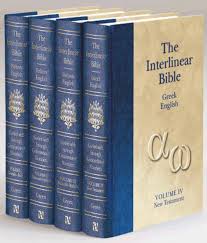
These volumes give you the English, Hebrew, Aramaic, and Greek translation of every single word, in the order they appear. That means that syntax and placement of the words are not going to be like any other translation you read because the word order is literally as it is printed.
For example, right from the start, we read in Genesis 1:1 that in the beginning, God created the heavens and the earth, but when we look at the interlinear word-by-word translation it says in the beginning, created God the heavens and the earth. This is a small change, but it helps to better understand the issues that happen when translating from one language to another, especially when the placement of adjectives, adverbs, and syntax have different rules.
The Interlinear Bible series has the English translation with the Hebrew and Aramaic for the Old Covenant writings and the English translation of the Greek for the New Covenant. Of course, there are no Hebrew New Covenant writings available, although you can find articles stating that the Gospel of Matthew was probably originally written in Hebrew. Perhaps one day we may find a viable copy of a Hebrew New Covenant letter or book, but as it is now, the interlinear can only give us the Greek to English translation for the B’rit Chadashah (New Covenant.)
As we finish our discussion about extra-biblical resources, let me mention that the two I have discussed above are not the only extra-biblical resources available. You can read the Apocrypha (found mostly only in Catholic Bibles) to enhance the narratives about biblical people and events, and the Talmud to get rabbinical commentary on the events in the Tanakh, as well as learning HaLacha, the Way to Walk, which is the Jewish lifestyle. You can even learn Jewish mythology. I use the Talmud because it has been composed by the great Rabbis of the past and I respect their learning and wisdom. That doesn’t mean I accept what they say or believe it all to be “gospel”, but it does help to know what they think when forming my own conclusions.
There are other resources, some of which people consider to be scripture, such as the Book of Enoch, the Gospel of Judas, the Zohar (Kabbalist) and, let’s not forget, the New Covenant source document called the Codex Alexandrinus.
Let’s get real, people- anything out there which can help you better understand the language, usage, and culture of those who actually wrote the Bible is valuable in helping to properly interpret what you read, but I would also add this caveat: what God says to us is “scripture” and what people say is not. There is a difference between God directing Moses to write something down or giving a Prophet the words to say, and Shaul (Paul) writing a letter to one of his Gentile congregations with his instructions regarding how they should follow what God said.
Extra-biblical resources are written by people, not by God, so remember that as you use them.
To end this topic, remember also that the best guide to understanding the Bible is to ask God to show you, through the Ruach HaKodesh (the Holy Spirit) what he wants you to see in his word. There can be multiple messages within the same sentence or passage, and each could be correct for the person reading it. For example, there are prophecies that are considered dual, meaning they have an immediate future impact and a far-reaching future impact, as well. Two different meanings from the same passage and both are correct within the context of their separate timelines. So always be aware, always be open to being led by divine understanding, and never stop reading the Bible.
The more times you read it, the better your understanding will become.
In our next lesson, we will be discussing a totally different aspect of properly interpreting the Bible, so until then…
L’hitraot and Baruch HaShem!
Video for Properly Interpret the Bible- Lesson 5
How To Properly Interpret The Bible: Lesson 4- Chumash and Commentaries
So far in this series, we have reviewed those tools that can be used by the reader when trying to interpret, for themselves, what is in the Bible. These tools are valuable, and we should always look for what God has for us, alone, when we read his word.
If you prefer to watch a video, click on this link: Watch the video.
(PS: I have a new microphone so the sound levels will be good.)
But that doesn’t mean someone else doesn’t have a proper interpretation, or a message that he or she was given which can edify us. That is why there are some extra-biblical tools we should use, as well, when seeking out the meaning of God’s word.
One of my favorite books for studying the Torah is the Chumash. Here is the one I use, which is the Soncino edition:
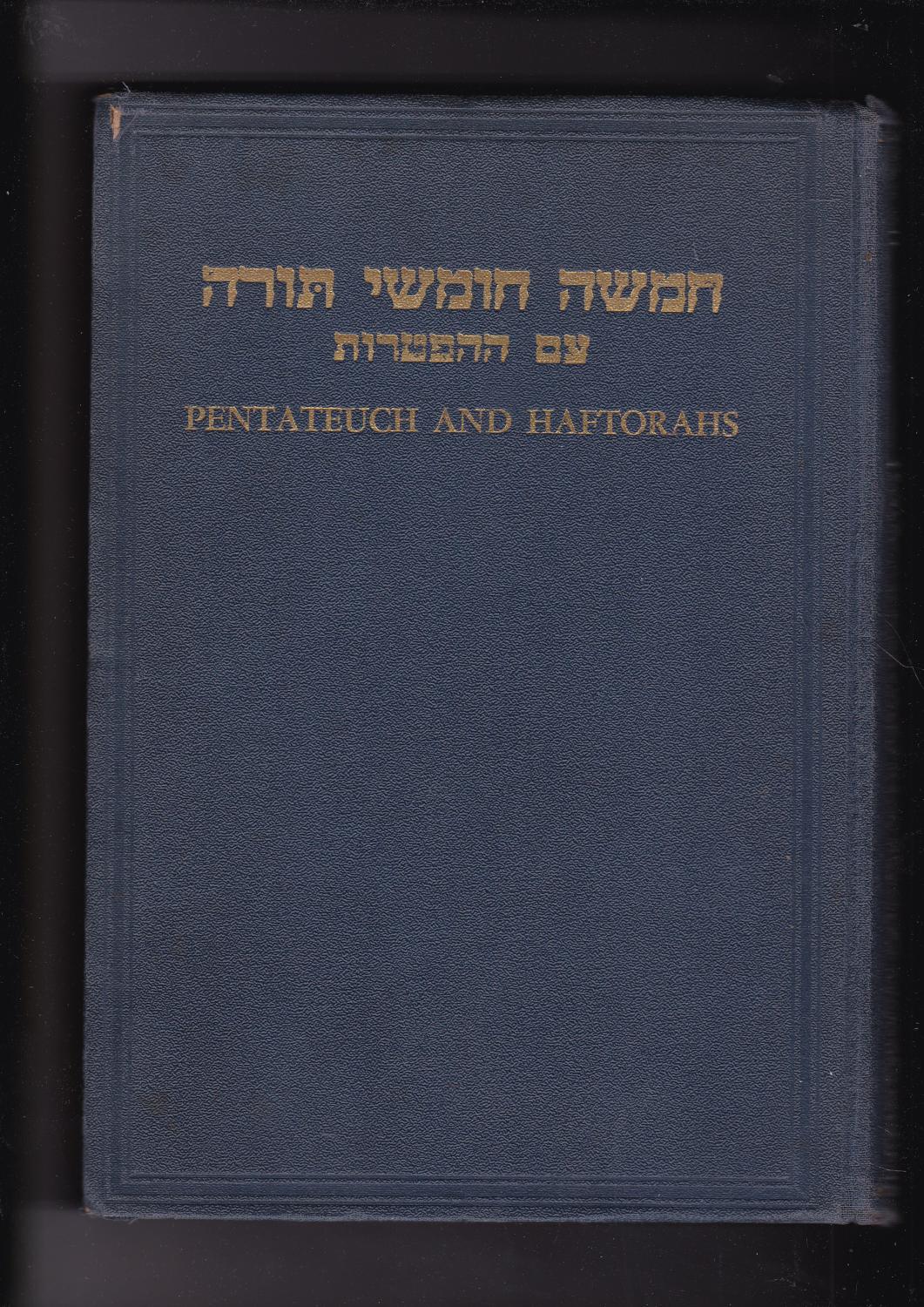
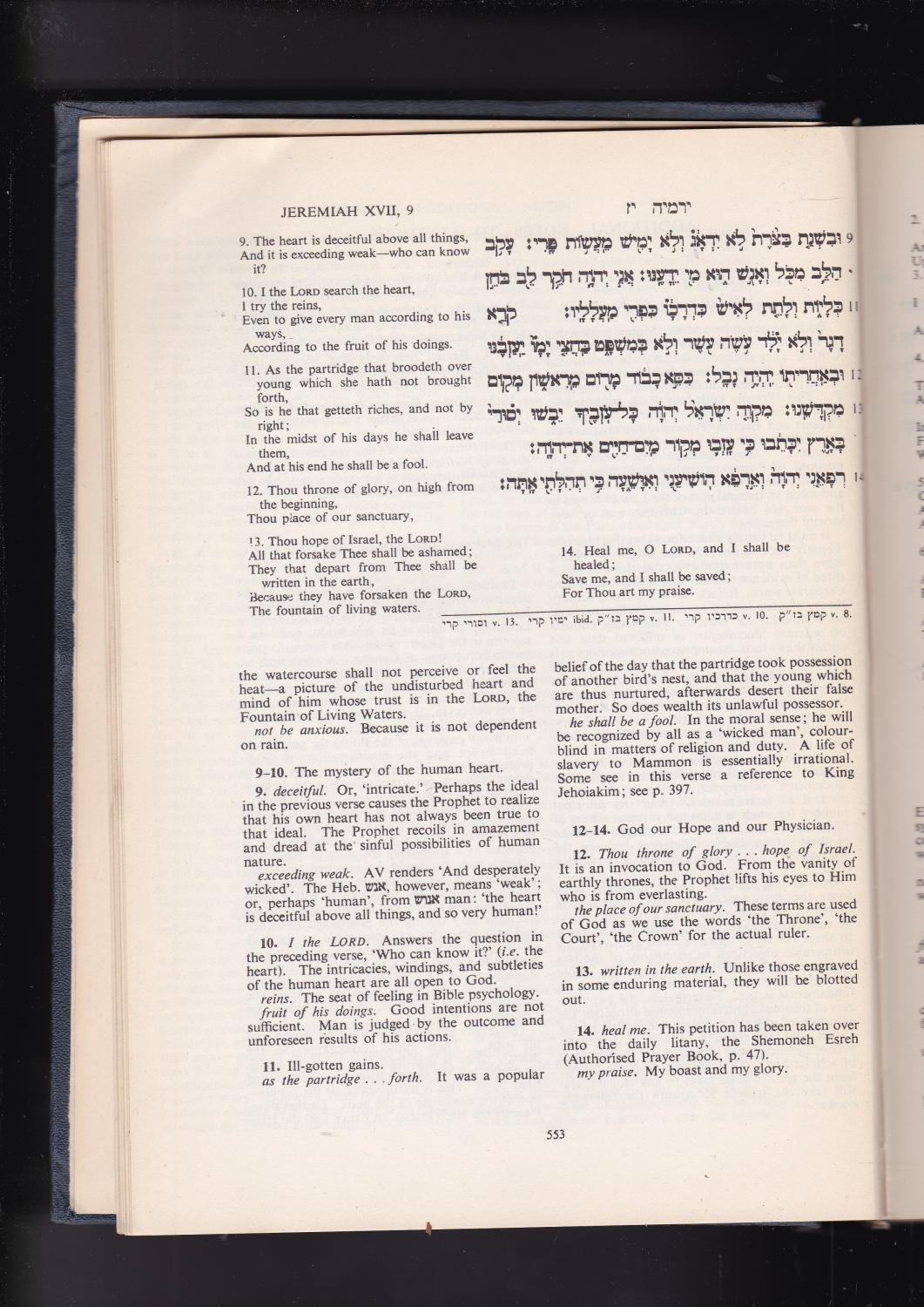
“Chumash” is a form of the word חמשת ,which is Hebrew for the number 5, representing the first five books of the Bible, i.e. the Torah. This book has the Torah, the English translation, and a commentary on the passage, as well. There are also detailed commentaries at the end of each book of the Torah.
Besides the Torah readings (called the Parashah), it also has the Haftorah readings, which are sections from other parts of the Tanakh that are read after the Torah portion and used to enhance the Torah reading by showing how what we read was performed (or failed to be performed) in later history.
What I love most about the Chumash is that it is just so very Jewish. It is, if you ask me, essential for Gentiles who want to know what the Torah means to Jews to read this book, and use it constantly when they come to something in the New Covenant that refers back to the Torah so they can see what Yeshua or an Apostle was thinking about when they said what they did. I say this because the Messiah and his Apostles thought much closer to the way the commentator of the Chumash thought than any Gentile commentator ever could.
Other examples of commentaries are below:
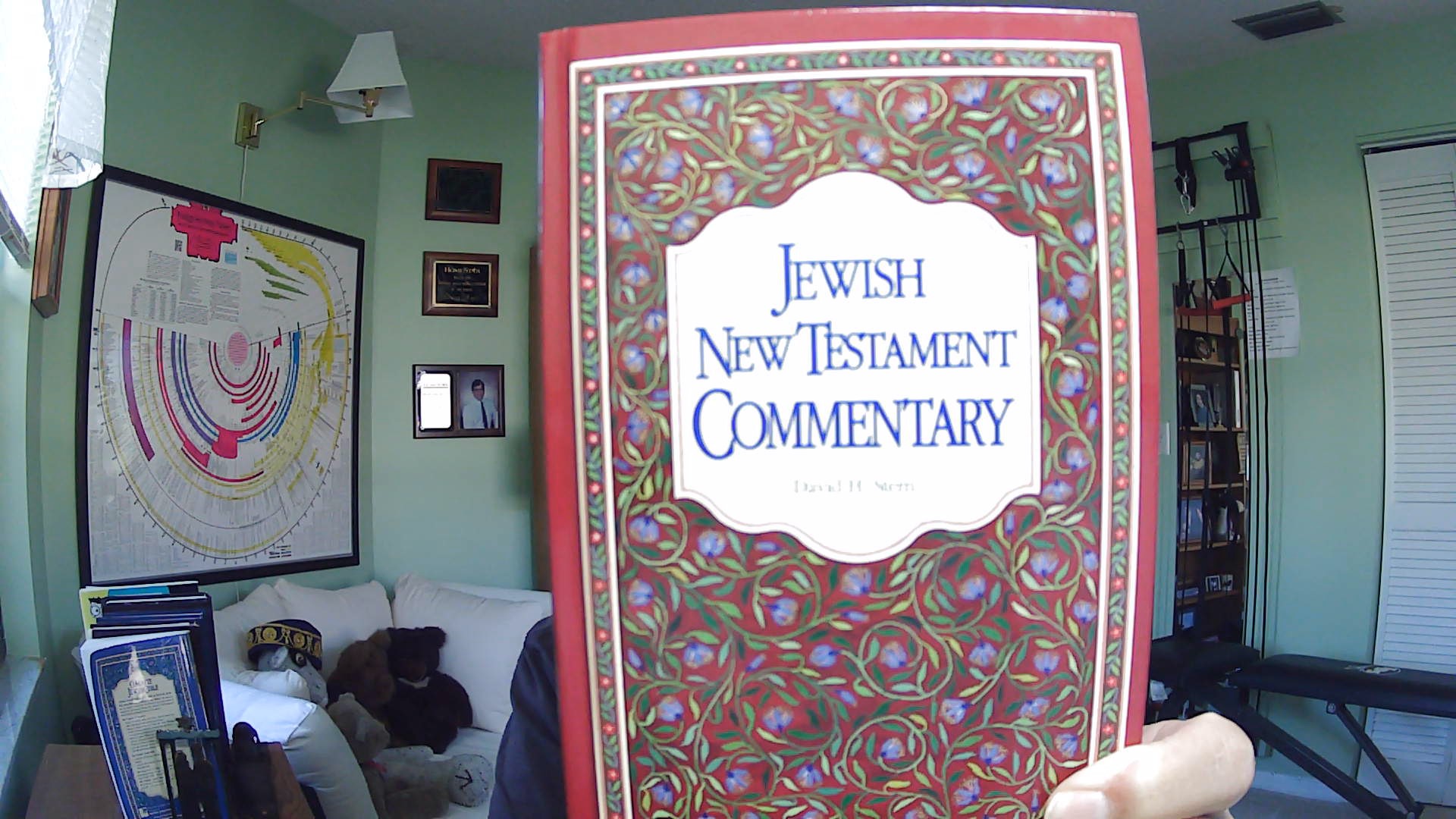

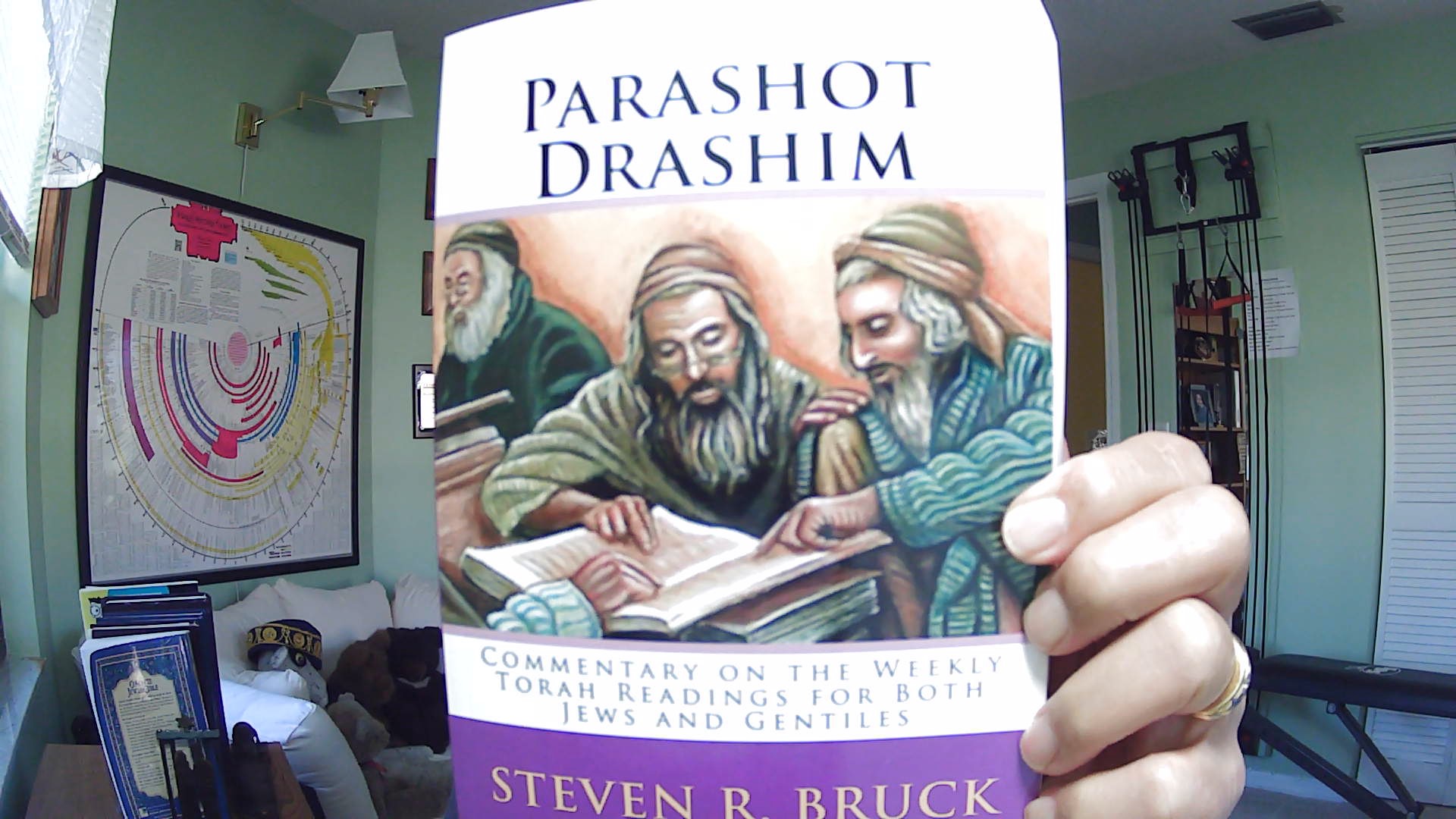
These are commentaries I use when I want to verify or see what someone else thinks about a passage I might be wondering about; however, these are not the only ones out there. In fact, there are many, many different commentaries written by all types of people, so when you look for one, try to find one that as you peruse it (before buying, of course) you can see if it seems to be in line with your understanding.
By the way, I really recommend the commentary called “Parashot Drashim.” I happen to know the author really well and think he has a pretty good idea of what he is saying.
Commentaries are very useful tools for properly interpreting the Bible, but just as with any tool, you need to use the right tool for the job. What I mean is, if you want to become familiar with the “Jewish mindset”, make sure the commentary you get is a totally Jewish one, meaning not Messianic and certainly not written by a Gentile. You might be surprised, and maybe even a little dismayed, at the negative tone it might have when referencing Christian interpretations of the messianic passages.
On the other hand, when you want to know what the New Covenant is saying, then you need to get a commentary written by a Gentile because you won’t find any Jews who want to have anything to do with the New Covenant, unless it happens to be a Messianic Jew.
This covers today’s lesson, and next time we will discuss other types of extra-biblical resources you can use when you are trying to properly interpret the Bible.
Oh, yeah, one more thing…even though this is a teaching series, I welcome any comments or additions you feel you would like to submit regarding any of these lessons.
So, until next time, L’hitraot and Baruch HaShem!
Video for Properly Interpret the Bible- Lesson 4
Parashah V’Yishlach 2020 (And he sent) Genesis 32:4 – 36
In last week’s reading, Jacob was on his way back to his father’s land and heard that Esau was coming to meet him, with 400 men. That didn’t sound good to Jacob- not good, at all!
If you prefer to watch a video, click on this link: Watch the video.
So Jacob comes up with a plan: He will appease Esau by sending ahead of himself a large gift, a little at a time, and also split his camp into two, so that in case one is destroyed, the other may survive.
After his group crosses a fork in the Jordan River, with Jacob remaining behind to ensure all have gotten across safely, at night a man comes and wrestles with Jacob throughout the evening, without success in overcoming him. While Jacob has control, in a desperate attempt to get free, the man causes Jacob’s hip to be damaged, but Jacob holds tight until the man asks to be let go because the morning is coming. Jacob refuses to accept the surrender until the man, who Jacob recognizes now as an angelic being, gives him a blessing. The angel gives Jacob a new name, Israel.
Jacob, limping from his injury, crosses the Jabbok River and joins the camps.
When Esau and Jacob meet, Esau is glad to see his brother, embraces and kisses him, and says he doesn’t require the gifts, but after Jacob insists, he takes them. Jacob introduces his family, and when Esau asks Jacob to go with him, Jacob politely begs off, giving the excuse that he needs to take the animals at a slow pace, as well as the young children in the camp. Jacob then settles in what is today called Shechem.
While settled there, Dinah, the daughter of Jacob, goes for a walk by herself in the countryside and is raped by the son of the leader of Shechem. The man falls in love with her and asks what bride price Jacob would want in order that the man can marry her. The sons of Jacob, Levi and Simeon (who the Chumash says were the brothers of Dinah from the same mother) state that all the men in the city must be circumcised in order for their sister to be part of that society. When the men agree to this, thinking more of being able to gain the riches of the family then doing the right thing, on the third day after the procedure, which is (supposedly) the most painful day, the brothers and their servants ransack the town and kill all the men, taking their sister back home with them. Jacob chides them for making his family a target for retribution, and after God advises him to go to Beth-El, Jacob moves his camp there. God protects them on the way so they aren’t harassed by any of the other people in that area.
Along the way to Beth-El, Rachel dies while giving birth to Benjamin. Jacob is approached by God, who confirms his promise to Jacob to give all the land to Jacob’s descendants, who will be a nation of kings.
The parashah ends with the lineage of Esau.
The Chumash comments that the name change from Jacob, which means one who supplants through guile, to Israel, one who has wrestled with God and succeeded, really indicates that Jacob had a spiritual metamorphosis.
Maimonides says that this was a prophetic vision, and other commentators have believed this contest to be symbolic: the struggle within each of us between our baser passions and nobler ideals. It seems to me, though, this had to be more than symbolic because there was a name change and Jacob did receive physical damage.
In any event, the name change was confirmed by God, and Jacob’s actions after this do represent a change of heart.
With Esau Jacob took advantage, and while with Laban, he took advantage, but now, as Israel, he condemns his sons for their violence and anger with regard to what they did to the men of Shechem (this is especially evident in the blessings he gives before his death.) As one who supplants, Jacob would have congratulated his sons for their guile, but he does the opposite, which shows the change of heart he has undergone.
Jacob used guile and his wits before he wrestled with the angel in that he sent the gifts to Esau, but after he sent his camp across the river he was alone in the dark, fearful and concerned, and he prayed to God for help and protection. Jacob figured to get out of trouble by sending gifts, but now he is out of ideas and has no more tricks, and finally looks solely to God for help.
Here we see the change from depending on himself to depending on God.
This is the change we must all make within ourselves. When we stop depending on ourselves or others and look totally to God, we will be winners.
This doesn’t mean to sit back and wait for God to do everything for us. Jacob didn’t do that- after he prayed for protection, he demonstrated his trust in God by continuing to meet his brother. Letting God be in charge doesn’t mean becoming idle; our God is a God of action, not of sitting around waiting for things to happen, and after we look to him for help and guidance we must then get off our tuchas and do whatever it is we have to do, trusting that God will see us through it.
And he will see us through it, or he might, if we are on the wrong path, prevent us from making things worse for ourselves. Sometimes God clears the way, and other times he will place thorns and briers in your path to redirect you. It is up to us to always be aware of what we are doing and to be open to God’s guidance.
The Ruach HaKodesh, the Holy Spirit, is the best guide anyone can have, and when we accept Yeshua as our Messiah and ask for the gift of the Ruach, we will receive it. But, again, it is up to us to listen to it.
Jacob was scared for himself and his loved ones, and in his solitude wrestled with what to do, finally coming to the conclusion that he needed to trust God to protect him. The Torah says he wrestled with an angel, but maybe he really was wrestling with himself- the old image of an angel on one shoulder and the devil on the other.
Even though we are told that Jacob defeated the angel, in the long run Jacob (the one who supplants) surrendered to God’s will and became Israel, the Prince of God.
Thank you for being here and please subscribe, check out my books, and share these messages with everyone.
Until next time, L’hitraot and Shabbat Shalom!
Video for Parashah V’Yishlach 2020
How To Properly Interpret The Bible: Lesson 3- PaRDeS
In the last lesson you learned that to properly interpret the Bible you need to read contextually so that the word makes sense within the sentence, the sentence within the paragraph, and so on. But that isn’t enough: you also need to use hermeneutics as you interpret what you are reading to ensure that whatever message you get is the same message throughout the rest of the Bible.
Today we will take this a step further and talk about the spiritual understanding of the words and passages we read.
If you prefer to watch a video, click on this link: Watch the video.
The Jewish system of biblical exegesis you will learn about to day is called PaRDeS: I have bold-printed specific letters because this is not a word, it is an acronym.
The “P” stands for the word P’shat. The P’shat is the literal, or plain language meaning of the words. It is, at best, a topographical understanding of the Bible and is sort of like the old saying:
What you see is what you get!
The “R” stands for the Remes. This is a deeper, more spiritual meaning of the word(s) we read. I will be giving an example of the difference between the P’shat and the Remes later in this lesson.
The “D” represents the Drash (sometimes called a Derash). A drash is a story with a spiritually moral ending. When people refer to the lessons of Yeshua they call them parables, but they are, in essence, a drash.
Finally, the “S” represents the Sod. This is a mystical understanding, the kind revealed through a revelation or vision.
When we read in the Gospels how people said that Yeshua taught and spoke differently from anyone else they had ever heard, that he talked as a man with authority, it was because all they had been taught by the Pharisees and Scribes was the plain language of the Torah, the P’shat. Yeshua took the people one step deeper into God’s word, which is why they were so astounded at his understanding and interpretation.
The best example I have found, which I use often, to demonstrate the difference between the P’shat and the Remes is the Sermon on the Mount.
When teaching about adultery and murder, Yeshua would begin with “You have heard it said…” and follow up with “…but I tell you…”; in this way he showed the difference between the P’shat and the Remes.
He told them that they shouldn’t murder (P’shat), but then he taught that if you so much as hate in your heart, that is the same as murder (Remes).
He also said we are told not to commit adultery (P’shat), but that if we lustfully look at another, we have already committed adultery (Remes).
Yeshua showed us the spiritual understanding of the literal words, i.e., physically hating someone is spiritual murder, and lusting after someone, even if not acted upon, is spiritual adultery. This is what was so impressive to the people, who had never been given the deeper revelation of God’s word.
The parables (drashim) Yeshua told were stories that had a spiritual moral, but the people didn’t understand because they had only been taught to listen to the words, the P’shat, and were unable to grasp the Remes of his messages. I believe the reason Yeshua often said that those who have ears should listen, and those with eyes should see is that he was trying to tell them to listen with their spirit.
The Sod is something that I really find hard to describe, as it is mystical and, as such, a difficult subject to grasp. Perhaps good examples are Daniel understanding the writing on the wall and interpreting the dreams of Nebuchadnezzar, or Joseph interpreting the dreams that Pharaoh had. These were visions that were indecipherable from a literal view, but on a mystical level were understood to be prophecies about events that would happen in the real world.
There is a “catch”, however, with regard to using the Remes (and Sod) when you are interpreting the Bible: you need to have spiritual eyes to see spiritual things, and (I believe) the only way to get spiritual eyes is to see through the Ruach HaKodesh, the Holy Spirit. When we read the Bible we will be shown the Remes by the Ruach, but if we don’t have the Ruach, we have no better chance of seeing God’s spiritual messages than color-blind people have when taking one of those “what number do you see” tests you get when applying for a driver’s license.
Maybe this is why so many people with biblical knowledge have so little understanding of what they “know”.
That’s it for today’s lesson. You now know you must read the Bible for yourself and how to use Circles of Context and Hermeneutics so you can properly interpret the meaning of the words you read. You also now know there is a deeper, spiritual meaning to the written words and to ask the Ruach HaKodesh to show it to you.
In the next lesson we will talk about extra-biblical resources available to further help you properly interpret the Bible.
Until next time, L’hitraot and Baruch HaShem!